
***If you haven’t read Part 1 and Part 2, I suggest you do so before continuing***
From all of life’s big moments, both joyful and tragic, we can learn something. This experience of the last 2.5 years, has brought a wealth of insight and wisdom with it. One thing for certain is we can never really know how we will react in any given situation. When we hear about tragedies in the news (you know, those things that happen to other people), we may find ourselves playing out, in our mind, how we would behave in a similar situation. But until we find ourselves living out an actual nightmare, it is difficult to know for certain how we might respond.
And so, it wasn’t a surprise to us, that as we began to share what had happened to Meredith in June 2022, we received a common sentiment:
“If I were you, I would have (INSERT: been charged with assault, done to her what she did to Meredith, lost my mind, exploded, etc.)”
OR
“If I were you, I wouldn’t have been able to (INSERT: control myself, contain my rage, cope, stop myself from hurting her, etc. ).”
We also heard things like, “You are stronger than I am. If someone did that to my child………” Initially, these comments felt judgmental as though our response to what happened was not extreme enough. How could we just calmly sit back? This person lived in close proximity to us and we had video evidence of the repeated and deliberate abuse of our Meredith.
To help the investigation, it was necessary to create detailed, time stamped notes to provide context. To do so, it required watching the same moments of abuse over and over. As I sat at our kitchen table reviewing 45 hours of video footage of the shifts the nurse had worked that week, I remember saying to Tim that “I just want to go and talk with her. I want to ask her why she did it.” He very quickly and firmly said, “You cannot go and talk to her or see her.” I tried to convince him (and myself) that I truly just wanted to speak with her. I am certain my intellect was being controlled by my instinct and that had I gone to her home, it would not have been a good outcome.
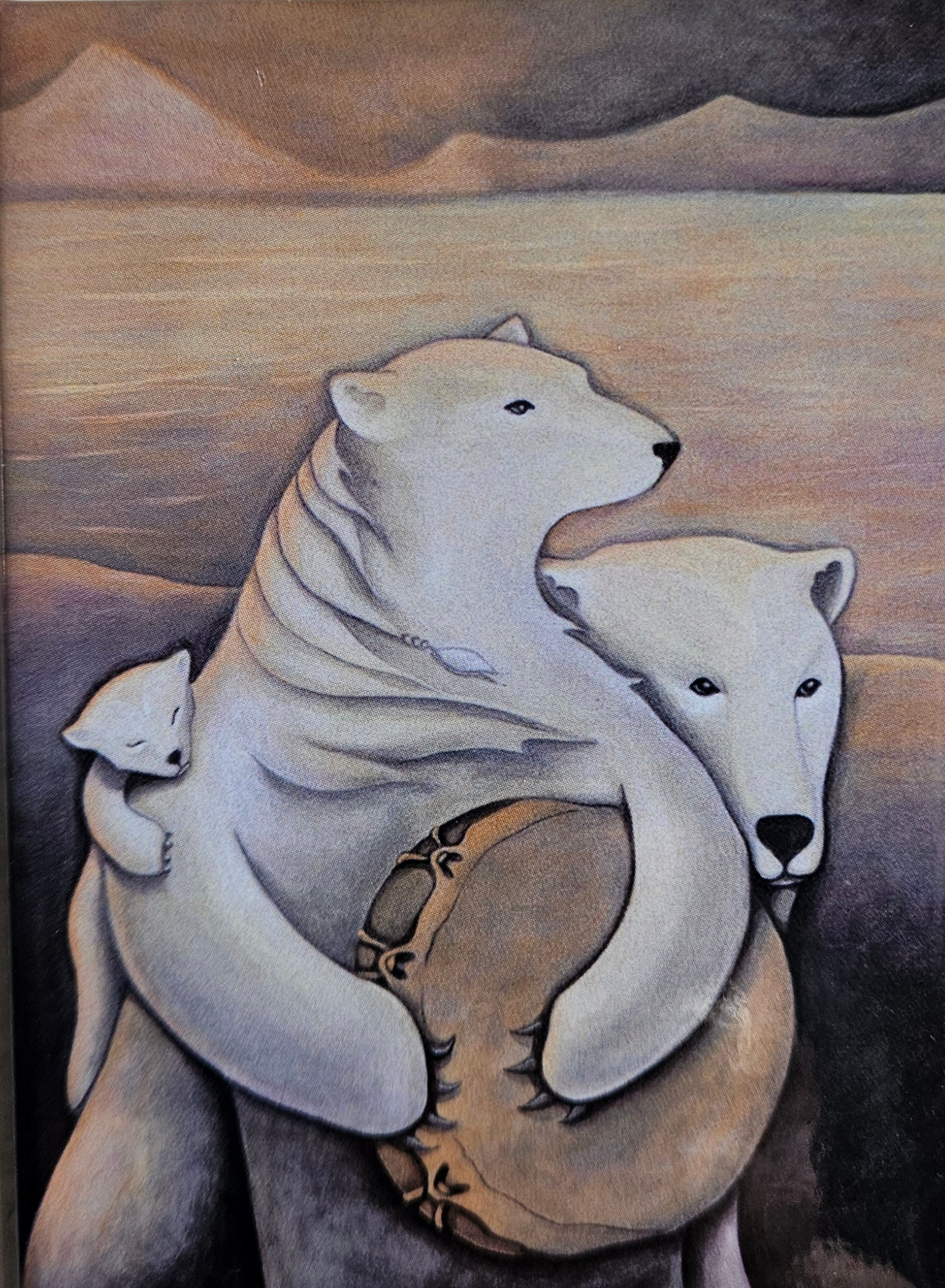
 It is easy for all of us, as parents, to imagine what we would do to someone who hurt our child. We are hardwired to defend and protect our young. In my book, I refer to this primal force as the IMGB (Inner Mama Grizzly Bear). This primal feeling acts as an internal guidance system. It must be respected and trusted, but it must also be restrained to prevent us from acting on impulses that may not be socially acceptable. Psychologist Adam Galinsky calls it the “Mama Bear Effect”~ the idea that when a mama bear is in the position of defending her cubs, all bets are off. From the moment Meredith was born, she depended on us and I could be overwhelmed by her vulnerability. I would tell Tim that if anyone ever hurt her, he would have to lock me in a room.
And then someone did hurt her and to my surprise, that mother bear instinct to destroy was tempered by the knowledge that doing so would not be in any way helpful to Meredith. Contrary to what most assume, to NOT act upon this very primal urge to harm the one who harmed your child is an even deeper level of protection. I would be no good to Meredith or Tim if I was sitting in a jail cell. This broken judicial system of ours illustrated its lack of concern for vulnerable people like Meredith and I am certain it would feel the same towards parents who take matters into their own hands.
So I bided my time and followed the proper channels confident that the professional and judicial systems would do their job in protecting my cub. That didn’t stop the middle-of-the-night flashbacks and detailed imaginings bubbling up from my subconscious of what I wanted to do to her. In therapy, these imagined scenarios are called Revenge Fantasies and as long as they play out in one’s mind and are not acted upon, they can be a creative and healthy way of processing and easing the profound rage that simmers below the surface. They are a healthy and necessary coping mechanism.
Although they helped in those early days, eventually I had to find other ways to express this overwhelming, breathtaking, adrenalin surging rage. If not expressed, the only option is to repress but repressed rage never ends well. This type of rage must move. Its energy is far too big to be contained in one human body. If not discharged, it becomes a hazard not only to your mind and body but to others. Think of it as a ticking time bomb and when it reaches capacity, the impact is devastating, far reaching and irreparable.
Certainly, we found comfort in disengaging from joy and using distraction, food and alcohol to temper the rage. I was also dealing with the very real and disorienting transition of menopause and all that entails. At that time, I was working outside of the home in a hospice as a grief counsellor. On top of that, we continued to deal with ongoing sleep deprivation and the stress of all the things that are a part of our lives. We had to figure out how to cover the night shifts for Meredith and the day shifts with skeletal staff in the midle of a pandemic. Hiring a new person to replace the abuser was not an option. Our trust was severed, and it would take us 2.5 years to hire a new person to help us in caring for Meredith.
We did our best to survive, however that rage was an ever-present heaviness that we lugged around with us as we waited patiently for decisions, answers and justice that never came.
So how did we eventually transform our rage and find peace?
Stayed tune to find out……….